Animal foods only
All meat for big guys
An all-meat week is the least complicated way to eat that exists: nothing to weigh, nothing to plan, three ingredients on the list. It is also the most restrictive thing on this site, and the section below says plainly what that costs as well as what it gives.
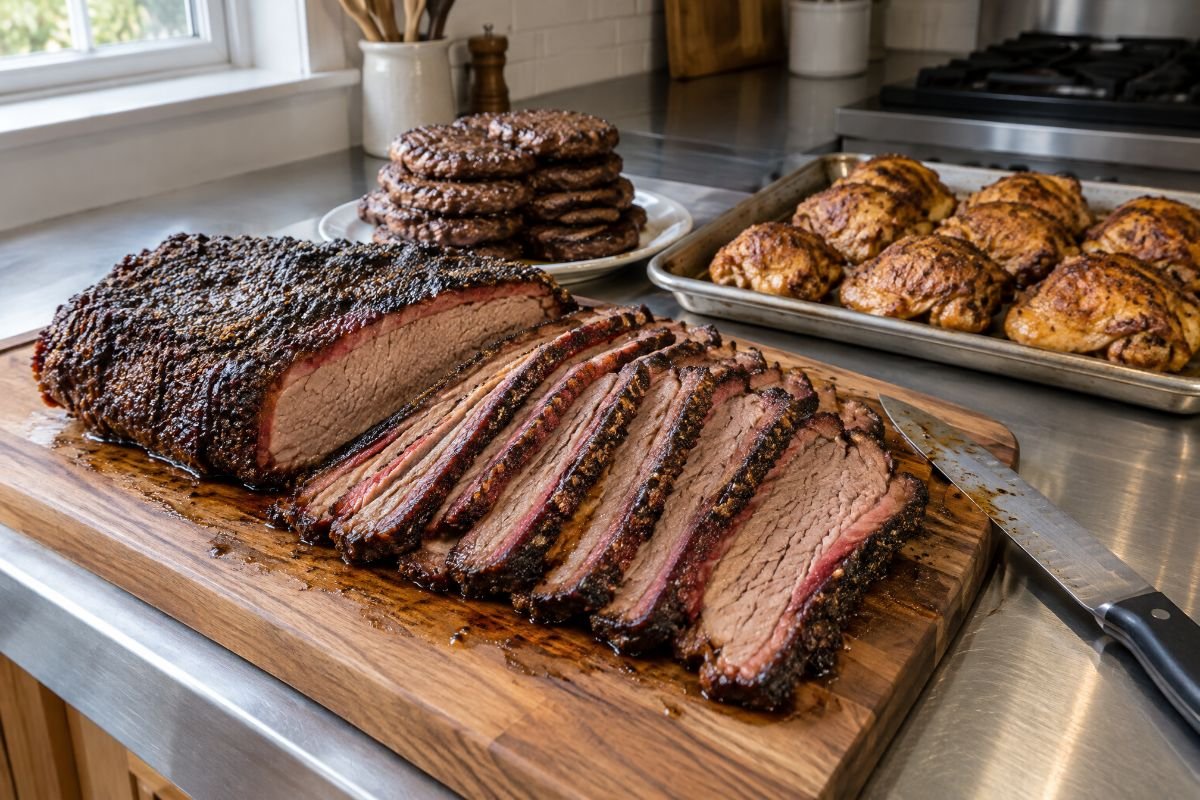
The simplest plan here, and the one that needs the most honesty
How this one works
Why people stick with it: there is no decision to make, appetite tends to fall off a cliff, and for a big man who has spent twenty years arguing with food, that quiet is worth something real.
What it costs, stated plainly: no fibre, no vitamin C from food, and a grocery bill that is the highest of the six tracks by a distance. This page treats it as a serious option and refuses to pretend those three things are not true.
The two cook sessions
What you make, and when
The site-wide schedule is Sunday for the long cook and Wednesday for the top-up. On this track that means:
- CookBraised or smoked chuck — 3 lb, 6 portions
- CookTray of chicken thighs — 6 portions
- Cook12 burger patties, cooked and stacked
- Cook18 hard-boiled eggs
- CookPork belly or a second chuck roast — 6 portions
- CookPan of liver and onions, or salmon fillets, for the week
- CookRender and jar the tray fat for cooking
Timed run sheets for both sessions are on the prep schedule.
The actual week
Seven days, about 230 g of protein
This is the whole week rather than a teaser. Friday dinner is deliberately left open — a plan with no room in it is a plan you break once and abandon.
| Day | Breakfast | Lunch | Dinner | Extras |
|---|---|---|---|---|
| Mon | Four eggs fried in beef fat, two patties | Braised chuck, six ounces | Chicken thighs, crisp skin | Boiled eggs, biltong |
| Tue | Three eggs, bacon | Chuck again, day two | Ribeye, salted, rested | Bone broth, cheese if you eat dairy |
| Wed | Eggs and leftover chicken | Burgers, two patties | Salmon fillets, butter | Boiled eggs |
| Thu | Four eggs, sausages | Chicken thighs, last portions | Liver and onions — once a week, and it matters | Bone broth |
| Fri | Eggs and pork belly | Cold chuck, sliced | Whatever you like — steakhouse is easy | Biltong |
| Sat | Big plate — eggs, bacon, patties | Burgers, cheese if you eat dairy | Lamb chops or pork ribs | Boiled eggs |
| Sun | Eggs and whatever is left | Cook day — eat as you go | Roast chicken, skin and all | Portion out Monday to Wednesday |
Big-batch recipes
The three that do the work
Real quantities, a per-portion protein count, and how long each one actually keeps. Everything here scales to a full tray or a full pot on purpose.
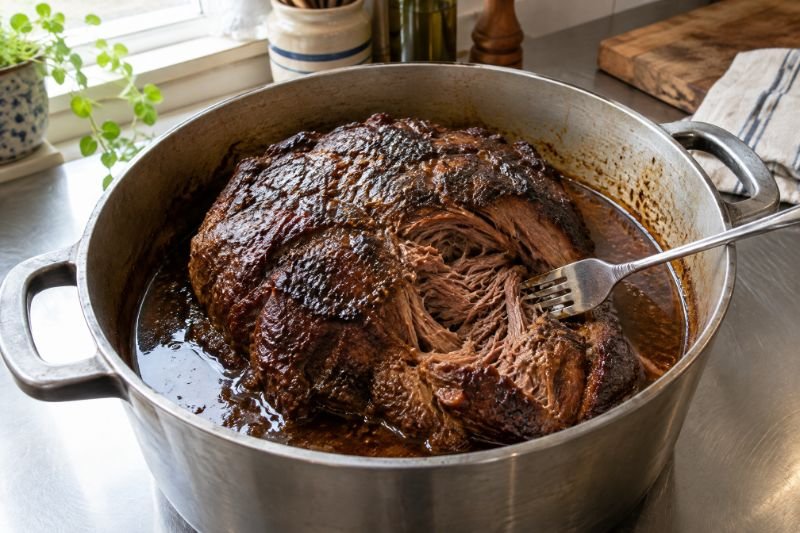
Braised chuck, salt and time
What goes in
- 3 lb beef chuck, in one piece
- 2 tbsp salt, 1 tbsp coarse black pepper
- 2 cups beef stock or water
- Beef fat or butter for the sear
How
- Salt it the night before, uncovered in the fridge. Dry surface, hard sear, deep crust.
- Sear every face in a heavy pot until properly brown — 12 minutes, not 3.
- Stock in, lid on, 300F for 4 hours. Done is when a fork twists freely.
- Rest 20 minutes in the pot before you cut it, or the juice ends up on the board.
Keeping it: Fridge 4 days, freezer 3 months in its own liquid. Cold sliced chuck is a better lunch than reheated chuck.
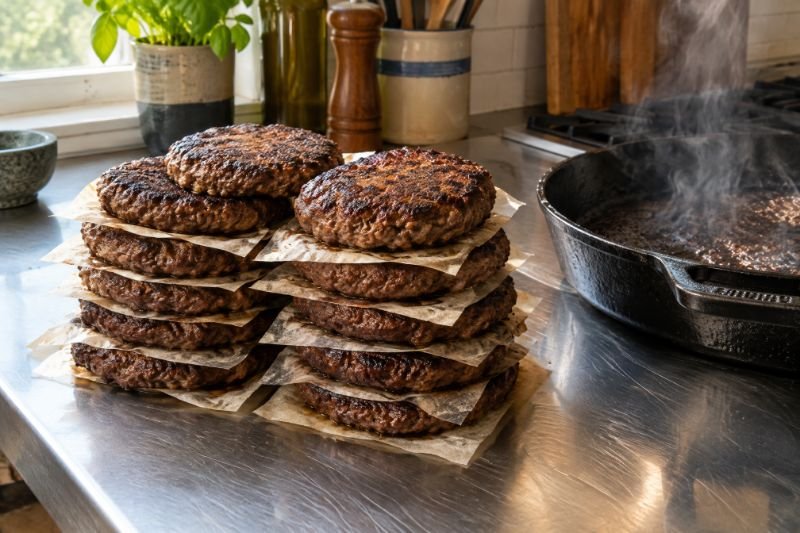
Twelve burger patties, cooked once
What goes in
- 4 lb ground beef, 80/20
- 2 tbsp salt, 1 tbsp pepper
- Nothing else — egg and breadcrumb make meatloaf, not burgers
How
- Handle the meat as little as possible. Weigh 5 oz balls, press flat between two sheets of paper, thumb dent in the middle.
- Salt only when they hit the pan. Salted early, the surface draws water and will not brown.
- Screaming hot cast iron, three minutes a side, no pressing.
- Stack them with paper between and cool fast — a warm stack keeps cooking itself grey.
Keeping it: Fridge 4 days, freezer 2 months. Reheat in a hot dry pan for 60 seconds a side.
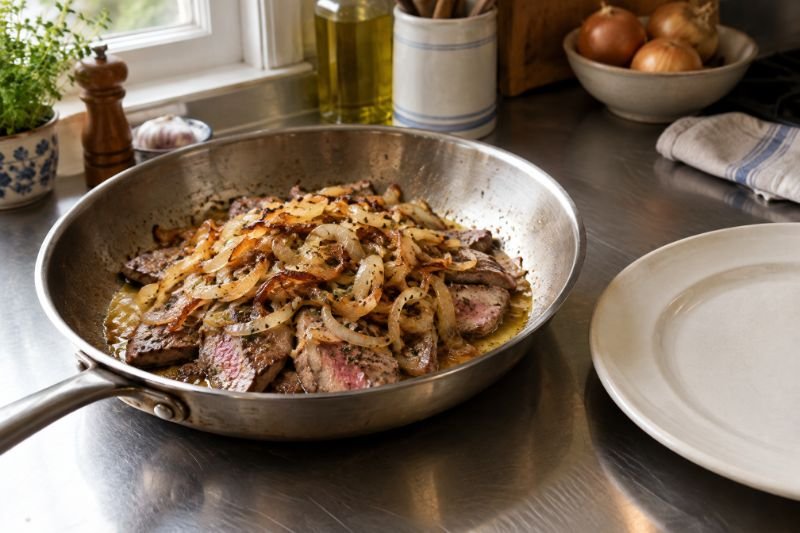
Liver and onions, the weekly one
What goes in
- 1.5 lb beef or lamb liver, sliced thin
- 3 onions, sliced
- 4 tbsp butter or beef fat
- Salt, pepper, a splash of vinegar at the end
How
- Soak the liver in milk or salted water for 30 minutes if the taste has put you off before. It genuinely helps.
- Cook the onions slowly in the fat for 20 minutes until sweet and brown. This is most of the dish.
- Liver dried, seasoned, 90 seconds a side in a very hot pan. Overcooked liver is grainy and it is why people say they hate liver.
- Onions back over the top, splash of vinegar, off the heat.
Keeping it: Fridge 3 days. This is the one dish here worth eating fresh — reheated liver is noticeably worse.
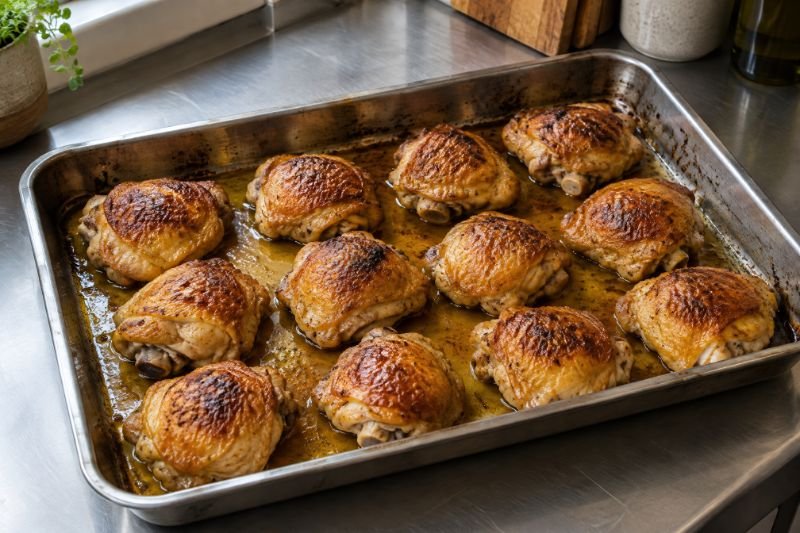
Roast chicken thighs in their own fat
What goes in
- 12 bone-in, skin-on chicken thighs
- 2 tbsp salt
- Beef tallow or reserved fat, if the tray needs it
How
- Dry the skin completely with paper towel and salt it heavily. Wet skin steams instead of crisping, and this dish has nothing else to hide behind.
- Skin-up on a tray with a little tallow if the thighs are lean, though most are not.
- 425F for 40 to 45 minutes, untouched. The fat that renders out is not waste to pour off — it is most of the calories in the dish.
- Rest 5 minutes in the tray juices before serving.
Keeping it: Fridge 4 days, freezer 3 months. Reheat in the oven or a dry pan, never the microwave, or the skin turns to rubber.
Doing it cheaper
The budget version
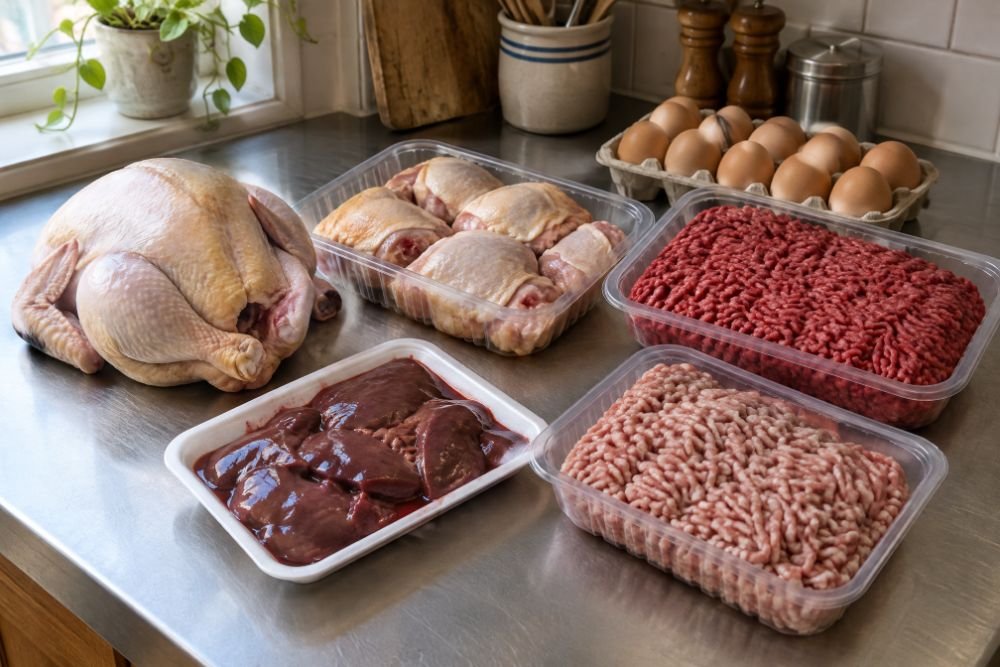
This is the dearest track on the site and there is no version of it that is cheap. Ground beef at $6.89 a pound is about 11 g of protein per dollar. The levers are eggs, whole birds, organ meat and the cuts nobody else wants.
Around $110–150 a week for one person at national average prices. Eggs, whole chickens, chuck and liver hold it near the bottom; steak and ground beef push it past the top.
| Instead of | Use | Why it is worth it |
|---|---|---|
| Steak and ground beef | Chuck, shoulder, brisket point, pork shoulder | Long-cooked cheap cuts eat better than a mid-grade steak and cost a third as much. |
| Chicken breast | Whole chickens at $2.01 a pound | Roughly four times the protein per dollar of ground beef, and the carcass makes the broth. |
| Skipping organ meat | Liver once a week | The cheapest thing at the counter and the only item on an all-meat plan carrying meaningful vitamin C, folate and vitamin A. |
| Fresh everything | The reduced shelf and the freezer | Meat freezes better than any other food group. Buying it when it is marked down and freezing it is the single biggest saving here. |
The prices behind these swaps, with sources, are in the protein-per-dollar table.
Shopping list
One week, one person
Sized for a big guy eating the plan above with a little slack in it. Halve the fresh produce if you shop twice a week.
Beef
- 3 lb chuck roast
- 4 lb ground beef 80/20
- 1.5 lb liver
- 2 ribeye or sirloin steaks
- Beef bones for broth
Pork and poultry
- 2 whole chickens or 12 thighs
- 2 lb pork belly or ribs
- 1 lb bacon
- 1 lb sausages, no filler
Eggs and fish
- 4 dozen eggs
- 2 lb salmon
- 4 cans sardines
Fats and staples
- Beef tallow or butter
- Coarse salt
- Black pepper
- Biltong or jerky, no sugar
An all-meat diet has no fibre and, apart from liver and fresh fish, very little vitamin C. Some people do well on it for a long time and some do not, and the honest position is that the long-term evidence is thin either way. If you are going to run this for more than a few weeks, get bloods done at the start and again at three months — lipids, iron studies and a metabolic panel — so you are working from your numbers rather than from anyone on the internet, this site included.
Nothing on this page is medical advice. It is a plan written for general strength training in healthy adults, and any condition or medication you are managing outranks it.
Not the right track?
Five others, same structure, all with a budget version.